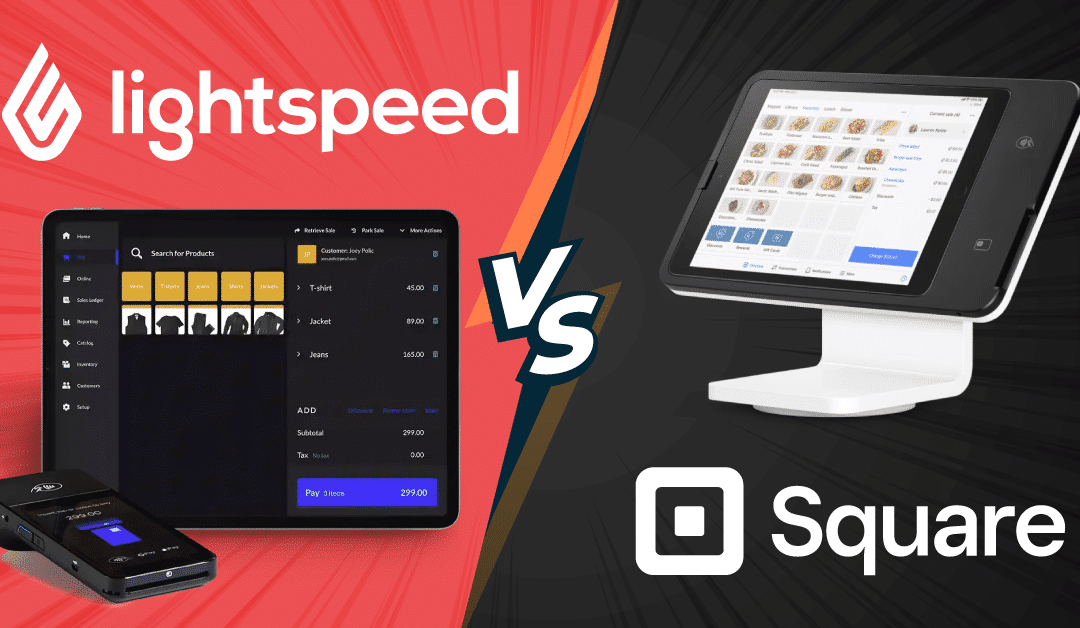
Lightspeed and Square are two of the most popular POS systems available today. Both handle transactions, inventory, and reporting well, but they serve different types of businesses.
Lightspeed leans toward feature-rich tools for retail and hospitality, while Square keeps things simple and affordable for smaller operations.
Below, we break down pricing, features, integrations, and support so you can decide which option best fits your business.
Key Takeaways:
- Lightspeed is better suited for retail and hospitality businesses that need advanced inventory management, detailed analytics, and industry-specific tools.
- Square is a strong pick for small and midsize businesses because of its simple setup, affordable pricing, and easy-to-use interface.
- The right choice between the two depends on your industry, your growth plans, and which features matter most to your day-to-day operations.
Product Overview
Lightspeed vs Square: A side-by-side comparison of pricing, payment processing, key features, hardware, and support for two of the most popular POS systems. Lightspeed targets established multi-location retailers and restaurants, while Square is built for startups and small businesses seeking simplicity.
| Compare | Lightspeed Retail · Restaurant · Golf |
Square Retail · Restaurant · Appointments |
|---|---|---|
| Pricing | ||
| Starting price | $89/moNo free plan | $0/moPermanent free plan |
| Retail plans | $89 · $149 · $289Basic · Core · Plus | $0 · $49 · $149Free · Plus · Premium |
| Restaurant plans | $69 · $189 · $399Starter · Essential · Premium | $0 · $49 · $149Free · Plus · Premium |
| Free trial / Contract | 14-day trial · No lock-in | Free plan (permanent) · No contract |
| Payment Processing | ||
| In-person / Online | 2.6% + $0.10 · 2.9% + $0.30 | 2.6% + $0.10 · 2.9% + $0.30 |
| Keyed-in rate | 2.9% + $0.30 | 3.5% + $0.15Higher risk rate |
| 3rd-party processors | Allowed (extra fee) | Not allowed — Square only |
| Key Features | ||
| Inventory | Advanced8M+ catalog, multi-loc, forecasting | Basic – ModerateItem library, alerts, variants |
| Reporting | Robust — custom reports | Standard (advanced on Premium) |
| eCommerce | Via Shopify / WooCommerce | Built-in Square Online |
| Loyalty & CRM | Included on Core+ plans | Paid add-on from $45/mo |
| Multi-location | Native & centralized | Available, less robust |
| Integrations | 250+ (API access on Plus) | Square App Marketplace |
| Hardware | ||
| Reader / Stand | iPad stand from $89 · reader from $49 | Free magstripe · chip reader $59 |
| Terminal / Register | Terminal $329 · w/ printer $399 | Terminal $299 · Register $799 |
| Support & Setup | ||
| Support | 24/7 chat all plans + account manager | 24/7 phone on Premium only |
| Onboarding / Setup | Free 1-on-1 session · Moderate curve | Self-serve · Live in minutes |
| Best suited for | Multi-location retailers & restaurants needing advanced tools | Startups, cafés & pop-ups wanting fast, low-cost setup |
| Bottom Line | Lightspeed POSPowerful for established retailers & restaurants. Deep inventory, 250+ integrations and multi-location tools justify the higher cost. | Square POSBest-in-class simplicity and low cost. Free plan works well; processing lock-in becomes a constraint at higher volumes. |
An Alternative to Lightspeed and Square POS Systems: KORONA POS
Neither Lightspeed nor Square works well for every business. If you're looking at Square POS alternatives, KORONA POS is one of the strongest options available.
Why KORONA POS stands out:
- Processing-agnostic: works with any payment processor, so you're never locked in. It also supports dual pricing to help reduce processing costs.
- Built for high-risk retail: liquor stores, smoke shops, tobacco retailers, dispensaries, and cannabis businesses can operate without the risk of getting shut down. KORONA helps match each business with the right processor.
- Retailer and QSR-ready: serves both retail stores and quick-service restaurants. Its inventory management tools are built to handle the complexity of high-SKU or regulated product catalogs.
- Multi-location and franchise support: manage multiple stores or franchise operations from a single back office.
If Lightspeed feels too expensive or Square keeps rejecting your business type, KORONA POS is worth a serious look.
Speak with a product specialist and learn how KORONA POS can power your business.
Schedule a DemoLightspeed vs. Square POS: Quick Facts
Lightspeed and Square are two of the most popular POS systems on the market. And both serve certain business types quite well. They facilitate transactions, enable inventory management and sales reporting, and offer various employee management and CRM features for all types of businesses.
Lightspeed offers a more feature-rich solution tailored to the retail and restaurant industries. On the other hand, Square provides a user-friendly interface suitable for small businesses and features like payment processing, inventory tracking, and sales analytics.
While Lightspeed excels in versatility and industry-specific tools, Square stands out for its simplicity and accessibility. Read on as we explore their pricing, integrations, and customer support to help you decide on your next POS solution.
Lightspeed vs. Square: A Detailed Comparison
Lightspeed and Square take different approaches to helping businesses engage with customers and run daily operations. Lightspeed offers deeper tools for retailers and restaurants focused on scaling, while Square keeps things simple for businesses prioritizing an easy in-store experience. The sections below cover what each system actually delivers.
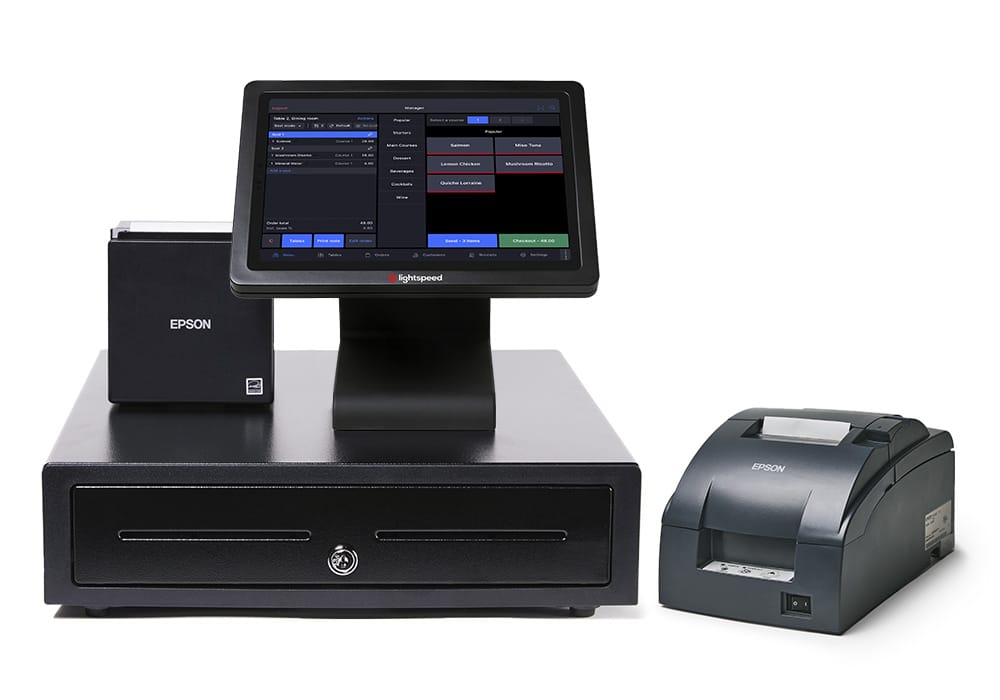
Lightspeed POS: Our Assessment
- Speed Up Sales: Lightspeed POS boasts a user-friendly interface that lets you process transactions quickly and efficiently. Ring up items, apply discounts, and accept payments in seconds, keeping your lines moving.
- Data-Driven Decisions: Generate insightful reports on sales trends, customer behavior, and employee performance. Use this data to make informed decisions for growth and optimize your business strategy.
- Cloud-Based Convenience: Access Lightspeed POS from any device with an internet connection. Manage your business on the go and eliminate the need for expensive, dated, on-premise software with their cloud-based POS.
- Inventory Management Made Easy: Track your stock levels in real-time to prevent costly stockouts and overstocking. Lightspeed automatically generates purchase orders to maintain optimal inventory levels.
- An Array of Verticals: Lightspeed has acquired several companies to help boost its reach among various business verticals. These include Chronogolf for golf course management and Vend for brick-and-mortar retail. Such acquisitions have helped Lightspeed provide a more curated solution for niche businesses.
You can also see our in-depth comparison of Lightspeed vs. Clover if you're also considering Clover as a POS system.
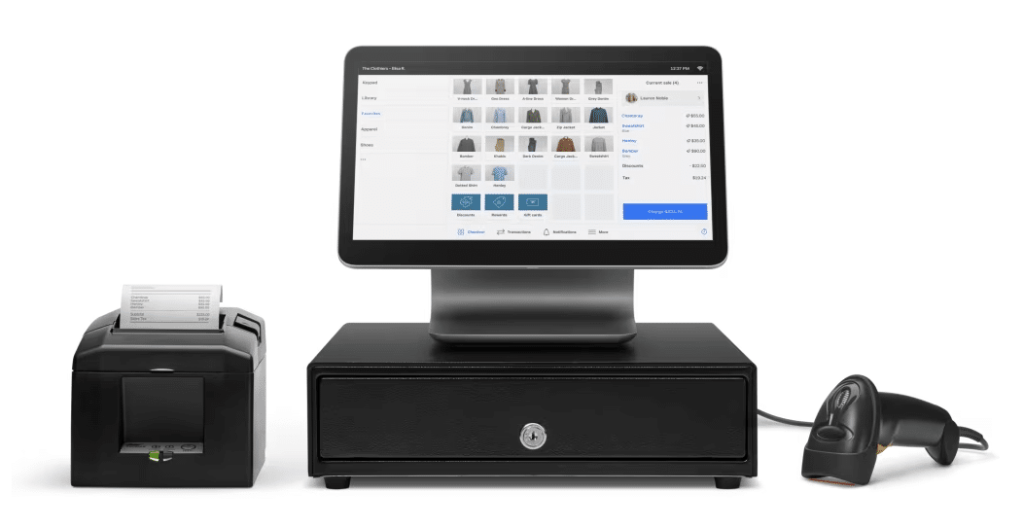
Square POS: Our Assessment
- Simple & Affordable: Square POS is easy to set up and use, perfect for smaller businesses. Free basic plans exist, with paid options offering advanced features at competitive prices.
- Sell Smarter: Square integrates with powerful tools for managing inventory, customer loyalty programs, and marketing campaigns, helping you grow your business.
- Mobile Ready: Run your business from anywhere with Square's free POS app. Take payments, manage inventory, and track sales on your smartphone or tablet.
- Fast & Secure Payments: Accept all major credit cards, contactless payments, and even send invoices with Square. Their secure system protects your business and customer data.
- Customize Your Solution: While the add-on features will increase Square's monthly price, the solution offers businesses many options to create customized software that fits their needs.
Lightspeed vs. Square POS: Pricing, Costs, Fees, and Contracts
Pricing and fees are critical considerations for your business when picking a POS system. Calculate all the costs associated with your POS software; this can significantly impact your bottom line.
Lightspeed Pricing
Payment processors
giving you trouble?
We won't. KORONA POS is not a payment processor. That means we’ll always find the best payment provider for your business’s needs.
Learn MoreLightspeed vs. Square: Strengths and Weaknesses
Lightspeed Pros and Cons
Pros of Lightspeed POS
- Strong Support
Lightspeed is available 24/7 via phone, chat, and Twitter. Dedicated account managers guide you through setup, training, and any snags you encounter. This comprehensive approach ensures you get the most out of your POS system and checkout flow.
- Inventory Management
Reviewers highlight Lightspeed POS’s strong inventory management. These tools help retailers keep track of their stock levels, automate reordering, and gain valuable insights into sales data. This can help them avoid stockouts and optimize their inventory levels.
- Flexibility and Scalability
Lightspeed POS offers a variety of plans and features, so you can choose a system that fits your business needs and budget. They also offer a wide range of compatible hardware options, so you can customize your setup to suit your store's layout. This makes Lightspeed POS a good choice for businesses of all sizes, from startups to established chains.
Cons of Lightspeed POS
- eCommerce Needs Improvement
Reviewers on Reddit have mentioned that while Lightspeed is a robust solution for brick-and-mortar vendors, its eCommerce platform is underwhelming. Lightspeed eCommerce gets 3.7 stars on Software Advice. While Lightspeed integrates with WooCommerce and Shopify, customers have also complained about the functionality of those integrations.
- No Free Subscriptions
Lightspeed's cheapest option is $89 This may not be the best fit for customers looking for a pay-as-you-go solution with zero monthly subscription charges.
- Extra Charge for Third-Party Processing
While Lightspeed allows third-party payment processing, it charges an undisclosed fee. The amount seems to vary depending on the business. Nonetheless, if you plan on keeping your own processing company or going with a third-party solution, get a quote and a guarantee before agreeing to any purchases.
Square Pros and Cons
Pros of Square POS
- Minimal Setup Demand
Square POS is known for its streamlined installation and user-friendly interface. Even if you're not tech-savvy, you should be able to get up and running quickly with Square.
This is a significant advantage for startup businesses that don't have much time or resources to invest in learning a complex POS system or those needing to rely on Square's customer service.
- Cost-Effective
Square POS’s free tier includes all the basic features you need to process payments and track sales. Paid plans offer additional features, but the pricing is generally very reasonable, especially for small businesses.
- Flexible and Mobile
Square POS works on various devices, including smartphones, tablets, and computers, giving you much flexibility in using the system. You can also use Square's mobile card reader to accept payments on the go, which is excellent for businesses that operate in multiple locations or sell at events.
Cons of Square POS
- No Processing Flexibility
Square POS clients must use built-in payment processing. There’s simply no way around it. This won't be an issue for many small businesses and will streamline operations. However, some retailers, especially those with high-volume transactions, may find processing fees too expensive and detrimental to their bottom line.
- Marketing Add-Ons Not Included
Loyalty and rewards aren’t included in Square’s packages, nor are email and marketing. These CRM/promotional tools have tier systems with different pricing levels based on email, text, and customer volumes.
Do you have trouble getting your POS customer service on the phone?
KORONA POS offers 24/7 phone, chat, and email support. Call us now at 833.200.0213 to see for yourself.
Or Contact us hereWho Should Choose Lightspeed?
Lightspeed works best for businesses that need depth and scalability:
- Established retailers with large product catalogs across multiple locations
- Full-service restaurants and hotels that need table management, ordering, and detailed reporting
- Golf courses are looking for an industry-specific management solution
- Growing businesses that plan to expand and need a system built to scale
Who Should Choose Square?
Square is the right fit for businesses that value simplicity and low startup costs:
- New or small retailers that need a straightforward, affordable setup
- Food trucks and quick-service restaurants that want fast, mobile payment processing
- Service-based businesses, such as salons or studios, using Square Appointments
- Pop-ups and market vendors that need a portable, contract-free solution
Lightspeed vs. Square POS Frequently Asked Questions
- Which is better Lightspeed or Square?
Choosing between Lightspeed and Square depends on your business needs. If you require robust industry-specific features and advanced inventory management, Lightspeed may be the better option. However, if you prioritize simplicity, ease of use, and affordability, Square could be the preferred choice, especially for small businesses.
- Does Square work with Lightspeed?
Square and Lightspeed are separate POS systems that do not directly integrate. While they don't have native integration, some third-party solutions or workarounds might facilitate data transfer or synchronization between the two platforms.
- Why is Lightspeed better than Shopify?
Lightspeed offers more advanced features explicitly tailored for retail and restaurant industries, including robust inventory management and customizable reporting tools. With its industry-specific focus and comprehensive functionality, Lightspeed is often preferred by companies seeking a more tailored solution than Shopify's broader appeal. Shopify is typically a better fit for eCommerce businesses.
- How much does Lightspeed charge per transaction?
Lightspeed typically charges a flat-rate transaction fee per payment, ranging from 2.6% + 10¢ to 2.9% + 30¢. Lightspeed also offers custom pricing for high-volume businesses or those with specific needs.
Use KORONA POS: The Best Alternative for Growing Retailers
In conclusion, Lightspeed and Square POS systems offer distinct advantages tailored to different business needs. Lightspeed shines with its industry-specific features, advanced inventory management, and comprehensive reporting tools.
On the other hand, Square stands out for its simplicity, user-friendly interface, and affordability, The choice hinges on industry requirements, scalability, and desired functionalities. Whether prioritizing robust features or ease of use, companies can leverage either platform to optimize operations and drive success in today's competitive landscape.
At the end of the day, speaking with sales representatives, weighing the costs and benefits, and asking other industry leaders about their experience will help you weigh your options on this major business decision.